Start with your role in the tunnel-bound trip
If an accident interrupted a commute toward the Lincoln Tunnel, the next person may know where you were headed while knowing little about the incident itself. Start with your role: driver, passenger or another road user. Then give the incident date and known road location. A passenger can preserve their own account and questions without adopting every detail of the driver’s version.
NJDOT’s Route 495 inventory places the tunnel entrance in Weehawken, Hudson County. Use that as brief geographic background, then return to the actual trip. Was contact on an approach, a connecting movement or another road? Where did the vehicle stop afterward? Record what you know about each point. This is the information that helps a new claim contact understand why a trip record, provider receipt and personal account may refer to different places.
Find the actual response and vehicle contacts
Create a small contact sheet with separate entries for the agency that supplied an incident reference, the insurer asking you for material and the vehicle provider or facility involved afterward. Use names and references from actual cards, messages or receipts. A tunnel destination does not identify the responding agency, and a service destination does not identify the collision point.
For a passenger, add who holds the vehicle records you are being asked about. You may have your own correspondence while the driver or vehicle provider has an estimate. Tell the recipient which records you possess and which need to be identified elsewhere. Confirm the appropriate contact and sharing process instead of presenting another person’s information as your own. The sheet should help locate the right source for a requested item, with private identifiers kept in a secure file.
Separate the incident from the later stop
A commuter may describe the whole episode as happening on the way into the tunnel. Break that account into three locations: where contact occurred, where the vehicle later stopped and where it was eventually received or inspected. Give each a source where available. The differences may explain why a photograph, service record and trip receipt carry different place descriptions.
A crossing or parking receipt has its own role. It may show a transaction or arrangement, without identifying the moment of contact. Keep the original and describe what it establishes. If a report entry and your location note appear different, list the exact difference as a question. A useful handoff tells the next contact which location a document describes rather than asking them to infer it from the destination of the commute.

Make the attachment list readable at a glance
A handoff note can list the available files with the provider or source, date and purpose: photographs, estimate, service record or written request. Identify the version where several documents have similar names. The next person can then ask for the relevant item without receiving an unfiltered archive.
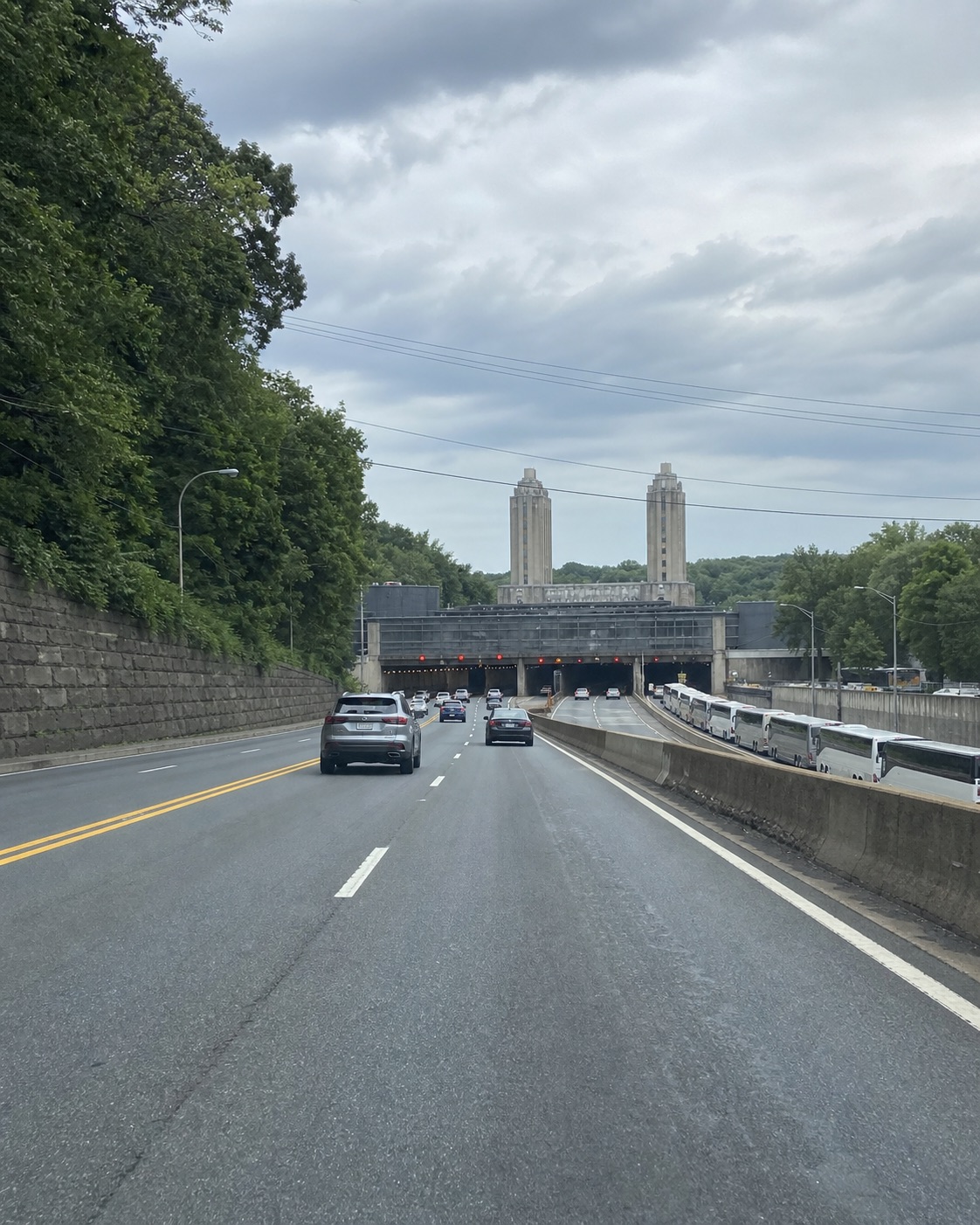
The accompanying generated scene shows a tunnel portal, towers and buses beyond a divider. It provides an illustration of an approach-road setting; it is no accident record or current map. Your attachment list should identify real records from your own event and the questions they address. If a photograph shows the vehicle after it moved, include that stage. Clear labels do more for the handoff than filling the file with images that cannot explain the outstanding task.
Include the last instruction in its original scope
Preserve the most recent relevant instruction and identify what it requested. If it arrived during a call, label your note as a call summary. If it is written, retain the original message alongside a short summary for convenience. This allows the next person to check the wording without relying entirely on your recollection.
Record what you did in response and what remains undone. An instruction about sending an estimate should stay tied to that estimate. An acknowledgment that it arrived should stay tied to receipt. The handoff should not turn an administrative stage into a coverage or payment decision. If the original wording is unclear, make that the question for the next contact. A modest, accurate summary can be far more useful than a confident interpretation nobody has confirmed.
Show the outstanding item with a clear status
Use a plain status for each relevant task: awaiting the requested record, submitted, receipt confirmed or awaiting an explanation. Add the associated date and source. This avoids the ambiguous word done, which may mean you sent something while the other person is still considering it.
If a record has not yet arrived, say what is missing and where you have asked for it. When using the NJSP and NJTA report portal, its own guidance explains that a report is not searchable until completed and approved. That is a useful readiness distinction for that service, not proof that the service handles your accident. Verify the appropriate source first, then keep the response and status with the request. Your handoff can remain useful while an item is still outstanding.

Send a purpose-specific set of records
When a new contact asks for documents, confirm which item and version are needed, the destination and how receipt will be established. Keep a copy of the submission. Share through a verified channel, especially where a record contains personal, policy or medical information. A whole-file transfer should not be the default response to a narrow question.
If you prepare a limited copy, preserve the original privately and label the copy accurately. A representative can explain whether further material is necessary. The generated paperwork illustration contains blank sheets and cards; your real documents deserve a secure folder and source labels. An efficient handoff makes the relevant record available to the appropriate person without making unrelated details accessible to every contact involved in the journey.
Use a short commuter handoff message
Hypothetical example, not a real accident: “I was a passenger on a trip toward the Lincoln Tunnel. The incident location in my notes is the Route 495 approach, but the provider receipt shows the later vehicle destination. I have my photos and your request dated [date]. Please confirm which incident reference and which vehicle document you need, and where I should send them.” Replace every detail with information you actually know.
Before sending, check five items: your role, incident location as known, responding-source reference if available, the provider contact and the specific requested record. Then identify the next action and its owner. A vehicle question may belong with the driver or provider, while your own document request can be answered directly. Keep the reply with the request so the next person can pick up the task without reconstructing the whole commute.
Keep continuity without claiming a result
A complete handoff can fit into a short note with an attachment index: current contact, open question, relevant instruction, action taken and next task. Use the historical Route 495 source for stable geography only. This guide states no current lane arrangement, tunnel operation or construction condition.
The approach helps organize follow-up; it establishes neither fault nor insurance benefits and predicts no compensation. Seek appropriate care for health concerns and qualified advice for legal questions. An inquiry does not establish representation. You can begin by making one unresolved task clear enough for the next person to pick up. That is the value of the handoff: the conversation continues from documented information rather than starting again with an uncertain account and a collection of unlabeled files.