Match the received file to the event
Start with the document and delivery message that actually arrived. Identify the event date, reference and issuing source where shown. If the source is unclear, make that the first question rather than choosing an agency from the nearest town name. Save the original file and the contact information associated with its delivery.
The historical NJDOT US 9 diagram identifies both Sayreville Borough and South Amboy City in Middlesex County. That is useful when a trip description uses one familiar town name while another record uses a different place reference. It does not establish which label fits your event. Compare the actual location entries and available identifiers. The aim is to connect the received file to the incident before an insurer or professional is asked to interpret it.
Compare the location, agency and identifiers
Make three short comparison lines: the event location as you know it, the agency or source identified by the report, and the reference used in the request. Check each against the information already in your private file. A contact who delivered a document and the organization named in it may need separate labels.
Keep a toll, crossing, parking or purchase receipt in the trip-record category. Its transaction time or address does not automatically identify the collision point or report agency. A receipt can remain useful without being asked to establish those facts. If a location label differs, preserve the difference precisely. If you recognize an error in your own note, add a dated correction. If you remain uncertain, take the comparison lines to the appropriate source or professional for clarification.
Identify the document type and scope
Read the title and surrounding information that explain what the document is. A basic report, service document and additional investigative item can have different purposes. Keep that type in the filename or index entry so the next recipient knows what is being supplied.
The official NJSP and NJTA crash-report portal explains that the basic NJTR-1 does not include additional investigative documents. This is a useful document-scope distinction, not a statement that this portal handles your specific Route 9 event. Verify the source appropriate to the actual record. If someone asks for a different item, clarify the type rather than repeatedly sending the file you already have under an increasingly broad label such as complete report.

Preserve the complete version privately
Retain the original received file where possible. If you make a working copy for notes, keep it distinguishable. Check that you can open and read the document rather than relying on a download notification alone. Preserve the surrounding message if it explains the file or retrieval process.
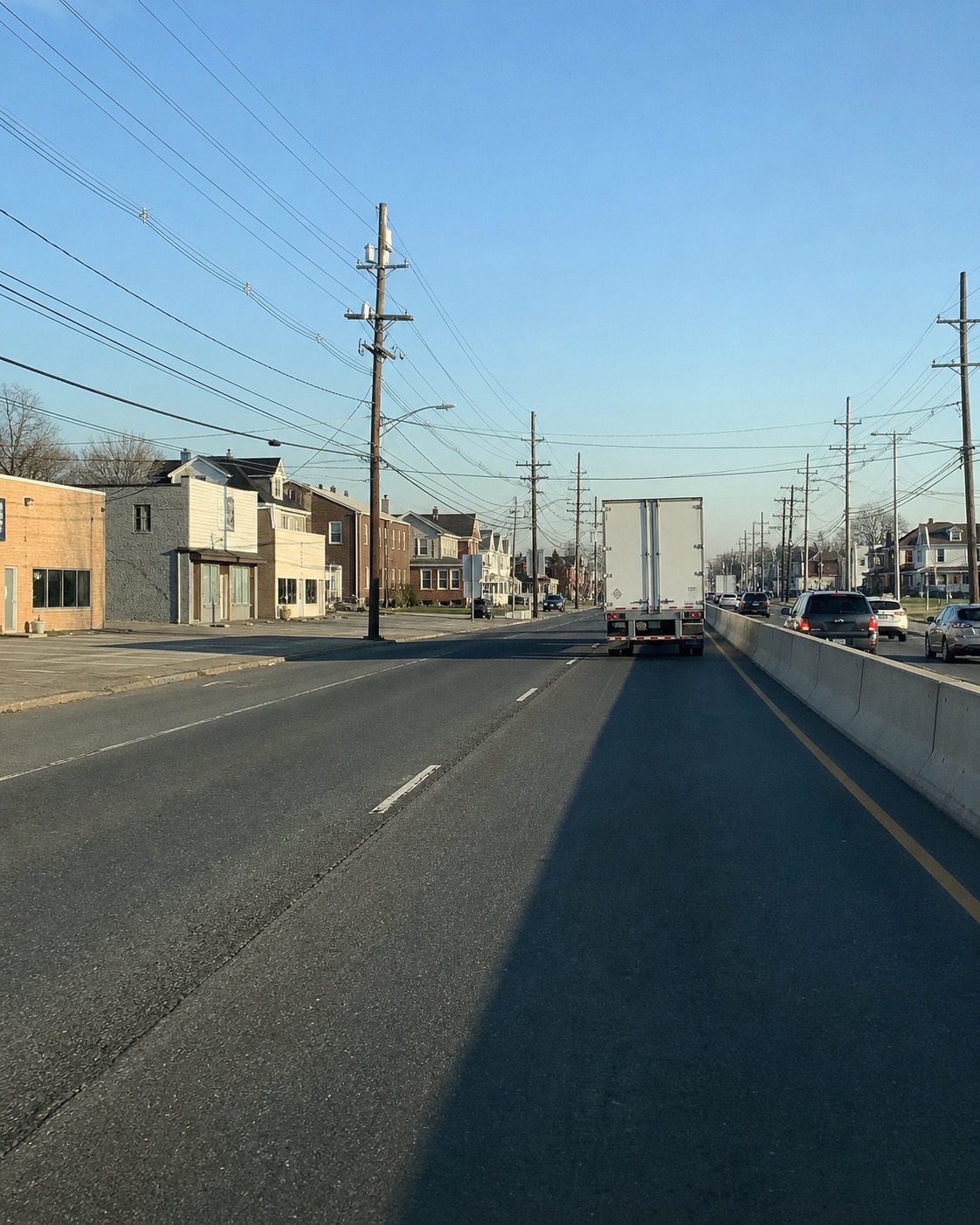
The generated Route 9 image here depicts a divided urban roadway with a truck, housing and utility poles. It contains no identifying route sign and verifies no Sayreville address or accident point. It introduces corridor character only. The real file should retain its own identifying context. An isolated screenshot of one sentence or page can be hard to interpret if the rest of the document is unavailable. A private complete copy helps answer that later question without making every page public.
Ask about a mismatch with one focused example
Hypothetical example, not a reported case: “My early note says Route 9 near Sayreville, while the received document uses a South Amboy location reference. The date appears to match. Could you help confirm the road segment this record describes and whether the reference belongs to my request?” This asks about the discrepancy without asserting that the document or your note must be wrong.
Use the same approach for a vehicle label or agency reference: identify the entry, page and comparison record. Preserve the actual wording. Ask the issuing source or a qualified professional about the appropriate clarification process where necessary. Keep the reply beside the question. A concise mismatch note lets the next person see what needs checking instead of searching a long accident narrative for the reason the file was forwarded.
Match the recipient’s request to the available file
An insurer or professional may ask for a report, a reference or a specific section. Confirm what is needed and which file or version they mean. If the request concerns material you do not possess, identify that gap instead of sending an unrelated document as a substitute.
When the relevant source is the NJSP and NJTA portal, its own guidance notes that a report is not searchable until completed and approved. That may help frame an availability question for that service. It does not resolve a failed search at another source or prove that every requested item exists. Keep any request, response and retrieved document connected so a later conversation can see what was sought and what was actually obtained.

Forward through a verified channel
Before sending the record, check the organization, representative, reference and requested item. Ask how it should be supplied and how receipt will be confirmed. Keep the submitted copy or a note identifying the exact file sent, especially where you prepare a limited copy for a particular task.
Store personal identifiers and medical details privately. A public group or open sharing folder should not become the distribution method for a sensitive accident file. If a recipient requires more material, it can request the relevant item through an appropriate process. The generated paperwork illustration contains blank cards and sheets; it represents no actual report. A well-organized exchange is useful because the document and destination are clear, not because the file has been copied to every possible contact.
Keep later explanations beside the relevant page
A reply may clarify one entry or ask for another record. Save it with the question and page that prompted it. If the explanation comes by telephone, label your note as a call summary. Important written instructions can then be examined alongside the actual document when a later discussion needs continuity.
Use a clear status for the remaining item: clarification requested, reply received or another document needed. An acknowledgment of delivery is an administrative stage and should remain labeled accordingly. A vehicle image has a similarly bounded purpose; the generated mirror illustration here establishes no collision sequence or injury. Keep the record trail specific enough that the next person can see which issue has an answer and which is still open.
Use the check to support the next review
The completed checklist can identify the source, event references, document type, original copy, clarification questions and recipient. That is enough to make a follow-up discussion more useful without rewriting the report into your own findings. The historical NJDOT diagram supplies local geography only; this guide asserts no current traffic arrangement or work condition.
The guidance concerns document organization and does not decide fault, insurance benefits or compensation. Seek appropriate medical care for health concerns and qualified advice for legal questions. An inquiry does not establish representation. You can start with the file already received and one important question about it. Preserving scope and identifiers gives the next reader a reliable starting point while leaving unresolved details available for appropriate review.